Get the latest from
Eshopbox




When selling on Flipkart, one of the decisions you need to make is how to fulfil customer orders. You can send your inventory to Flipkart’s warehouses and let Flipkart handle storage, packing and shipping through Flipkart Fulfilment (FBF). Or, you can choose self-ship and manage order fulfilment from your own warehouse or through a third-party fulfilment centre.
This choice is especially important if you sell on multiple channels and keep your inventory in one location. With FBF, you may need to move some stock to Flipkart’s warehouses, which can make it harder to track inventory across locations and plan replenishment. With self-ship, you can fulfil Flipkart orders from your existing stock, but you remain responsible for packing, dispatch and returns.
This guide compares FBF and self-ship in terms of cost, control, delivery experience and the work involved. It also explains how a third-party fulfilment partner can help manage Flipkart orders, so you can choose the option that works best for your business.
What is Flipkart Fulfilment (FBF)?
Fulfilment by Flipkart (FBF) is a service through which sellers store their products at Flipkart's fulfilment centres. Once a customer places an order, Flipkart manages the warehouse activities involved in preparing and shipping it.
Instead of processing every Flipkart order from your own location, you send inventory to a designated Flipkart warehouse. Flipkart then takes care of storage, picking, packing and shipping as part of the fulfilment process.
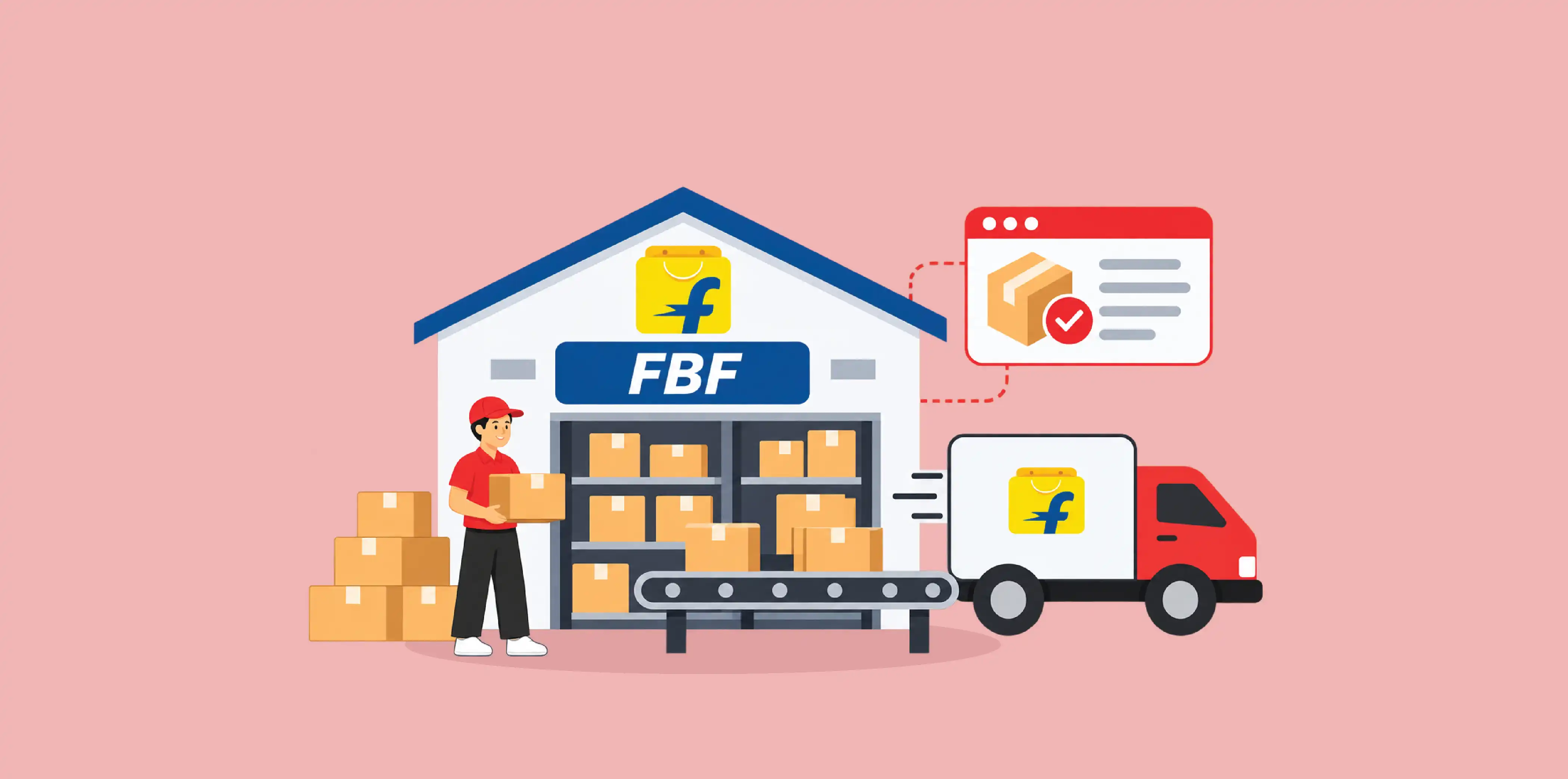
How does Flipkart Fulfilment work?
The process generally follows these steps:
- Send inventory to a Flipkart warehouse: You plan your stock requirements and arrange to move products to the designated fulfilment centre.
- Flipkart stores your products: Inventory is stored at the warehouse and made available for eligible customer orders.
- Orders are processed: When a customer places an order, Flipkart's warehouse team picks the required products.
- Products are packed and shipped: Flipkart handles packaging and dispatch through its logistics network.
- Returns are managed: Customer returns are handled through Flipkart's fulfilment process, subject to its applicable policies.
What services does FBF include?
FBF covers several activities that sellers would otherwise need to manage themselves.
- Storage: Products are stored at Flipkart's fulfilment centres.
- Picking and packing: Warehouse teams pick the ordered products and prepare them for shipment.
- Shipping and delivery: Flipkart manages the shipping process and delivery to customers.
- Returns handling: Customer returns are managed through the applicable FBF process.
- F-Assured eligibility: FBF listings can receive the F-Assured badge under Flipkart's programme.
This arrangement allows sellers to outsource warehouse and shipping operations for their Flipkart orders.
What remains the seller's responsibility?
Using FBF does not mean you can stop managing your inventory or listings. You still need to:
- Forecast demand and decide how much stock to send to each fulfilment centre.
- Monitor inventory levels and arrange replenishment.
- Maintain accurate product listings and pricing.
- Plan inventory for sales events and seasonal demand.
- Review applicable fulfilment fees and other seller charges.
You also need to ensure that your products meet Flipkart's eligibility and operational requirements.
What is F-Assured?
F-Assured is a badge displayed on eligible product listings on Flipkart. It helps customers identify products that meet Flipkart's service and reliability standards. The badge can build customer confidence and help sellers make their eligible listings more appealing to potential buyers.
FBF is one route through which eligible products can receive the F-Assured badge. However, the badge and fulfilment model are not interchangeable terms. Certain non-FBF listings may also receive F-Assured status based on the seller's reliability score.
The badge does not mean every product automatically qualifies. Eligibility depends on Flipkart's applicable requirements and seller performance.
What is self-ship fulfilment on Flipkart?
Self-ship fulfilment is an arrangement in which the seller takes responsibility for preparing and shipping orders rather than using Flipkart's warehouse fulfilment service.
You can store inventory at your own premises or use a third-party warehouse. When an order arrives, your team or fulfilment partner retrieves the product, packs it and prepares it for dispatch.
Depending on the shipping arrangement enabled for your seller account, you may also manage the delivery through your chosen logistics partner.
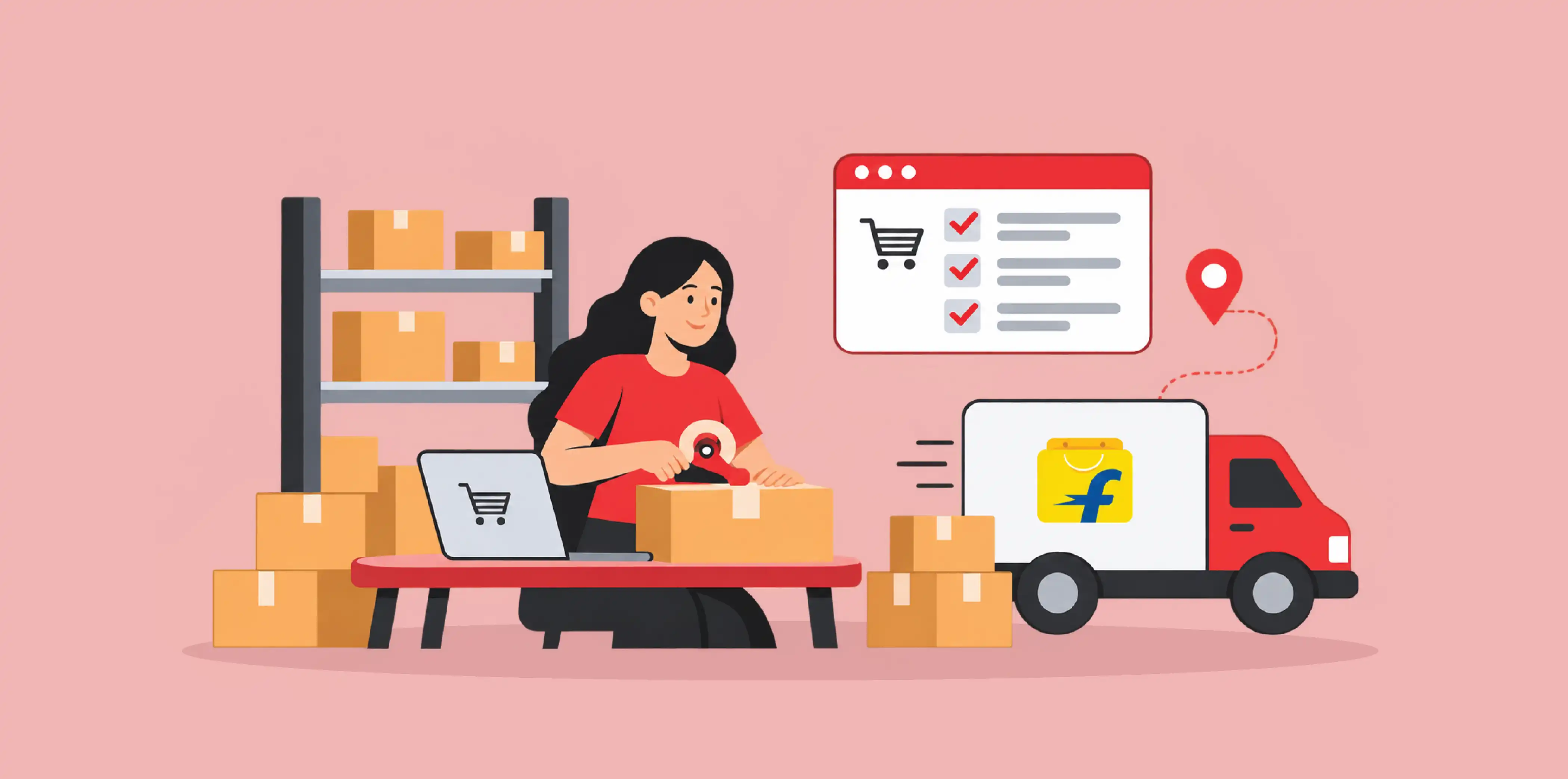
How does self-ship work?
A typical self-ship process involves the following steps:
- Store inventory: Keep products at your own warehouse or a third-party fulfilment centre.
- Receive the order: Monitor incoming Flipkart orders and confirm the required inventory is available.
- Pick and pack: Retrieve the product, check the order details and pack it according to the applicable requirements.
- Arrange dispatch: Prepare the shipment and coordinate the handover to the applicable logistics partner.
- Track delivery: Monitor shipment progress and manage delivery-related issues according to the shipping arrangement.
- Handle returns: Follow Flipkart's applicable return process and manage the activities assigned to the seller.
The exact logistics responsibilities depend on the fulfilment configuration. Under Flipkart's Non-Fulfilment by Flipkart (NFBF) option, for example, sellers pack orders at their location before a Flipkart logistics agent collects them. A separate self-ship arrangement may place more responsibility for shipping and delivery on the seller.
What control do sellers retain?
Self-ship gives sellers greater control over several parts of the fulfilment process.
- Inventory storage: Decide where products are stored and how stock is organised.
- Packing: Choose packaging materials and manage product preparation, subject to marketplace requirements.
- Warehouse operations: Set internal processes for picking, packing and dispatch preparation.
- Inventory allocation: Decide how stock is distributed across locations and sales channels.
- Fulfilment partner: Where permitted, choose a third-party provider to manage warehouse operations or shipping.
However, greater control also means greater responsibility. Your team or fulfilment partner must meet the applicable processing, dispatch and delivery requirements set by Flipkart.
Flipkart Fulfilment vs Self-Ship: What is the difference?
Both models help sellers fulfil customer orders, but they differ in who manages storage, warehouse operations and shipping.
Here's a side-by-side comparison.
Note: Flipkart's exact services, fees, shipping arrangements and F-Assured eligibility depend on the seller's account, fulfilment configuration and current marketplace requirements.
The main difference is how much of the fulfilment process you want to manage. FBF transfers defined warehouse and shipping activities to Flipkart, while self-ship gives you more control over how orders are prepared and where inventory is stored.
What should sellers consider before choosing a fulfilment model?
The best fulfilment model depends on your business requirements. Before choosing one, evaluate the following factors.

Order volume and sales patterns
Start by looking at how many orders you receive and how demand changes throughout the year.
If you receive consistent order volumes and want to outsource warehouse operations for Flipkart, FBF may be worth considering. It allows you to use Flipkart's fulfilment infrastructure without managing a separate warehouse operation for those orders.
If your sales fluctuate significantly or you already have an established warehouse, self-ship may offer more flexibility. You can plan warehouse capacity around your overall business requirements rather than relying entirely on one marketplace's fulfilment network.
Also consider how your order volumes change during major sales events. Your fulfilment setup should handle higher demand without creating processing or dispatch backlogs.
Storage and inventory requirements
Think about where your inventory needs to be available.
If you sell primarily on Flipkart, storing stock at its fulfilment centres may simplify order processing for that marketplace. However, if you also sell through other platforms like Amazon, Myntra, Nykaa and more, you need to consider how inventory will be allocated across these channels.
For example, sending a large share of your stock to Flipkart fulfilment centres may leave less inventory available for orders from your website.
A self-ship setup can make it easier to manage inventory from a shared warehouse, provided your systems and integrations support stock synchronisation across channels.
Fulfilment costs and margins
Compare the total cost of fulfilling an order under each model. Looking at one fee in isolation can give you an incomplete picture.
With FBF, consider applicable storage, fulfilment and other marketplace charges. With self-ship, account for warehouse rent, staff, packaging materials, shipping costs, technology and returns handling.
A useful way to compare the models is to calculate the total fulfilment cost per order.
For example, a seller may find that using FBF reduces the need for warehouse staff but increases the cost of storing slow-moving inventory. Another seller with an existing warehouse may find self-ship more economical because the infrastructure is already in place.
Your product size, weight, storage requirements, sales volume and return rate can all influence the final fulfilment cost.
Control over operations
Consider how much control you need over inventory handling and order preparation.
FBF works well when you prefer to outsource defined warehouse activities to Flipkart. However, you have less direct involvement in how products are stored, picked and packed.
Self-ship is more suitable when you want to manage these processes yourself or work with a fulfilment partner that follows your operating requirements.
This can matter for brands that use customised packaging, product bundles, quality checks or specific handling instructions.
Sales across multiple channels
If you sell only on Flipkart, managing inventory through its fulfilment network may be relatively straightforward.
But as your business expands to other marketplaces and your own website, inventory coordination becomes more important.
You need to know how much stock is available across all the channels your brand sells on, track incoming orders from each channel and ensure the same inventory is not allocated to multiple orders.
A self-ship setup supported by a suitable inventory management system or third-party fulfilment partner can help coordinate stock across channels.
When does each fulfilment model make sense?
The right choice depends on your existing operations and how you plan to grow.
When is Flipkart Fulfilment suitable?
FBF may be a good option if:
- You want Flipkart to manage storage, picking, packing and shipping for eligible orders.
- You prefer to outsource warehouse operations for Flipkart sales.
- Your products are suitable for the applicable FBF requirements.
- You want to use Flipkart's fulfilment infrastructure rather than manage a separate warehouse operation.
- Your inventory planning can accommodate stock allocated to Flipkart's fulfilment centres.
For sellers who want a more hands-off approach to Flipkart order fulfilment, FBF can reduce the day-to-day warehouse work involved in processing orders.
When may self-ship be suitable?
Self-ship may be a better fit if:
- You already operate a warehouse or work with a fulfilment partner.
- You want more control over inventory storage and packing.
- You sell through multiple marketplaces and your own website.
- You need to coordinate inventory across different sales channels.
- You have specific packaging or product-handling requirements.
- You want to manage fulfilment operations as part of a wider business setup.
This model gives you more flexibility over warehouse operations, but your team or fulfilment partner must be equipped to manage order processing and meet Flipkart's requirements.
Can sellers use a third-party fulfilment partner for Flipkart orders?
Yes. Sellers can use a third-party logistics (3PL) provider to manage warehousing and fulfilment activities while selling on Flipkart. Instead of storing and processing orders at their own premises, sellers can keep inventory at a third-party warehouse and outsource day-to-day fulfilment operations.
A typical third-party fulfilment setup involves three main activities:
1. Inventory storage and management
Sellers send their products to the 3PL's warehouse, where inventory is stored and managed. If the seller operates across multiple sales channels, the provider can synchronise stock information across connected marketplaces and the brand's website. This helps maintain accurate inventory levels and reduces the risk of the same stock being allocated to multiple orders.
2. Order processing and dispatch
When a customer places an order on Flipkart or another sales channel, the order details are sent to the fulfilment system for processing. Warehouse teams then pick the ordered products from available inventory, pack them and prepare them for dispatch as per the defined SOP.
3. Shipping and order visibility
The fulfilment provider arranges for the courier to pick up and deliver the order. It also shares order details and shipment updates with the seller, allowing them to track the order and check its fulfilment status.
How Eshopbox supports Flipkart sellers
Eshopbox offers warehousing, inventory management, multi-carrier shipping and services that help sellers manage fulfilment across Flipkart, other marketplaces and their own websites.
Here's how Eshopbox supports these operations:
- Distributed warehousing: Store inventory across Eshopbox's fulfilment centres and position stock closer to customer demand.
- Multi-channel inventory management: Manage stock across connected marketplaces and your website through a shared inventory pool, helping keep availability information aligned.
- Order processing: Manage warehouse activities such as picking, packing and dispatch through Eshopbox's fulfilment operations.
- Multi-carrier shipping: Access multiple courier partners and select suitable shipping services based on destination and delivery requirements.
- Order and inventory visibility: Monitor stock movement, order status and fulfilment progress across connected sales channels.
For sellers looking beyond a marketplace-specific fulfilment setup, Eshopbox provides a way to manage warehousing, inventory and shipping through a connected fulfilment operation. Sellers can outsource day-to-day warehouse activities while retaining visibility into inventory and orders across their sales channels.
Which model suits your business?
If you sell primarily on Flipkart and want Flipkart to manage warehouse operations, FBF may be worth exploring. If you need greater control over inventory and want to coordinate fulfilment across multiple channels, self-ship or a third-party fulfilment setup may be a better fit.
Compare the responsibilities and costs involved in each model before deciding which one works for your business.
Conclusion
Choosing between Flipkart Fulfilment and self-ship comes down to how you want to manage your inventory and fulfilment operations.
FBF can suit sellers who want Flipkart to handle storage, packing and shipping for eligible orders. Self-ship offers greater control over inventory and order preparation, particularly for businesses that already have warehouse operations or sell across multiple channels.
If you want to outsource fulfilment without relying on a separate warehouse setup for every marketplace, a third-party fulfilment partner is another option worth considering.
Evaluate your order volumes, inventory requirements, fulfilment costs and wider sales-channel strategy before making a decision. The right model is the one that supports your current operations while leaving room for your business to grow.
Connect with our fulfilment expert today.
Talk to salesRelated Articles
What kills profitability in ecommerce logistics? 8 costs D2C brands often miss
Electronics festive sales fulfilment: Handling high-value order spikes and fraud risk
5 fulfilment numbers ecommerce founders should check every morning


Privacy Policy
Terms & Conditions