Get the latest from
Eshopbox


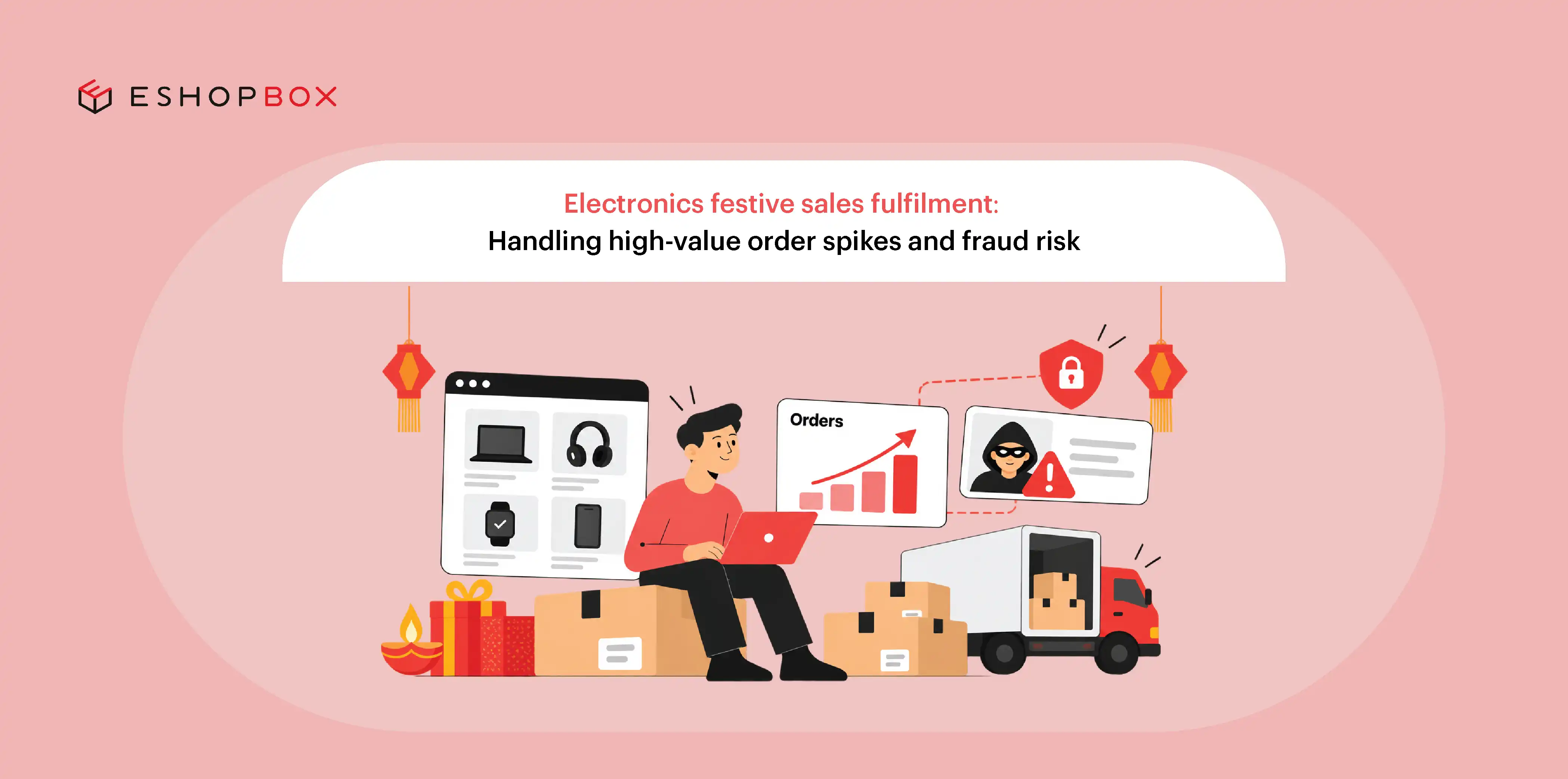


Electronics festive sales fulfilment: Handling high-value order spikes and fraud risk
Festive sales can bring a sudden surge in demand for electronics such as smartphones, laptops, televisions, home appliances and more. A few popular products may account for a large share of orders, leaving fulfilment teams with more shipments to process in a short period.
For electronics brands, the challenge goes beyond handling higher volumes. Each order may contain an expensive product with a unique serial number, accessories and warranty-related documentation. A wrong shipment, damaged item or orders requiring additional verification can lead to a significant loss. If warehouse capacity and verification processes aren't ready for the rush, teams may struggle to keep orders moving while maintaining control over high-value inventory.
Preparing for festive sales means planning for both volume and risk. Here's what electronics brands should address before the rush begins.
Why electronics fulfilment becomes harder during festive sales
Festive demand puts pressure on fulfilment operations in multiple ways.

Demand concentrates around popular products. Discounts can cause orders for a handful of hero SKUs to rise sharply. If the warehouse hasn't planned stock placement, picking capacity and packing materials around that demand, backlogs can build up even when other products move at their usual pace.
Each inventory error costs more. Miscounting a low-cost accessory and losing track of an expensive smartphone have very different financial consequences. High-value products need reliable stock records and clear checks at receiving, picking and dispatch.
Product identification matters. For electronics with serial numbers or IMEI numbers, the brand may need to know exactly which unit went to each customer. This information can be important for warranty claims, repairs, product recalls and return verification.
Packing and transit need extra care. A smartphone may need anti-static protection and cushioning to protect its screen and internal components, while a television requires stronger outer packaging and corner protection to prevent impact damage. Smaller accessories, such as chargers and cables, also need to be packed with the main product to avoid missing items. During festive sales, rushed packing can lead to inadequate protection or incomplete orders leaving the warehouse.
Suspicious orders need timely attention. High-value orders with incomplete delivery details or unusual customer behaviour may need further verification. Processing every order without checking risk indicators can expose the business to failed deliveries and potential losses. On the other hand, reviewing every order manually can slow down genuine purchases.
These challenges require a fulfilment plan that accounts for the products being shipped, not just the number of orders expected.
What can go wrong when fulfilling high-value electronics orders?
Teams can manage risks more easily when they understand where losses and customer complaints are likely to originate.
The wrong product or unit reaches the customer
Two products may look similar but differ in model, storage capacity or colour. For example, two smartphone variants may have identical packaging but different storage capacities. During a busy sale, warehouse staff may pick the wrong variant if SKU details and product labels aren't checked carefully. This can result in customers receiving products that don't match their orders, leading to complaints, returns and replacement shipments.
Serial-number and IMEI tracking adds another layer of product identification. Recording the identifier against each order helps brands verify which specific unit was dispatched and compare it with the product received during a return. Without these records, investigating product mismatches, warranty claims and return disputes becomes difficult.
Brands should therefore include SKU and serial-number checks in their fulfilment process, where applicable, and retain these records for future reference.
Returned products are incomplete or unsuitable for resale
An electronics return may include the main device but be missing a charger, accessory, manual or original packaging. In other cases, the returned unit may be damaged or may not match the product originally shipped.
Restocking such a product without inspection can create another customer complaint. The warehouse team should check the product's identity, condition and included components before deciding whether it can return to sellable inventory.
Poor packing or transit issues can damage expensive products
A device can leave the warehouse in good condition and still arrive damaged if the packaging doesn't protect it adequately during handling and transit. High-order volumes can make it harder to follow packing instructions consistently.
Brands should define packaging requirements for different product categories and check whether teams follow them during peak periods. Lost, damaged or tampered-with shipments also need a clear investigation process, supported by dispatch records and carrier information.
Which fulfilment metrics should you monitor during festive sales?
A daily review helps fulfilment managers spot problems while there is still time to act. Rather than looking only at total orders shipped, monitor the following metrics alongside order volume.
These metrics should have clear owners. Warehouse managers can review stock accuracy, picking errors and processing time. The fulfilment or operations team can monitor verification queues, dispatch performance and returns. The customer service team can work with operations on delivery exceptions and order verification.
Reviewing the figures by SKU, fulfilment location and sales channel can also help distinguish a general capacity issue from a problem affecting a specific product or process.
How can brands reduce fraud without slowing down genuine customers?
A manual review of every high-value order can create a bottleneck during a sale. At the same time, processing every order without additional checks can expose brands to delivery failures and financial losses. The challenge is to balance order verification with processing speed so that genuine purchases aren't held up unnecessarily.
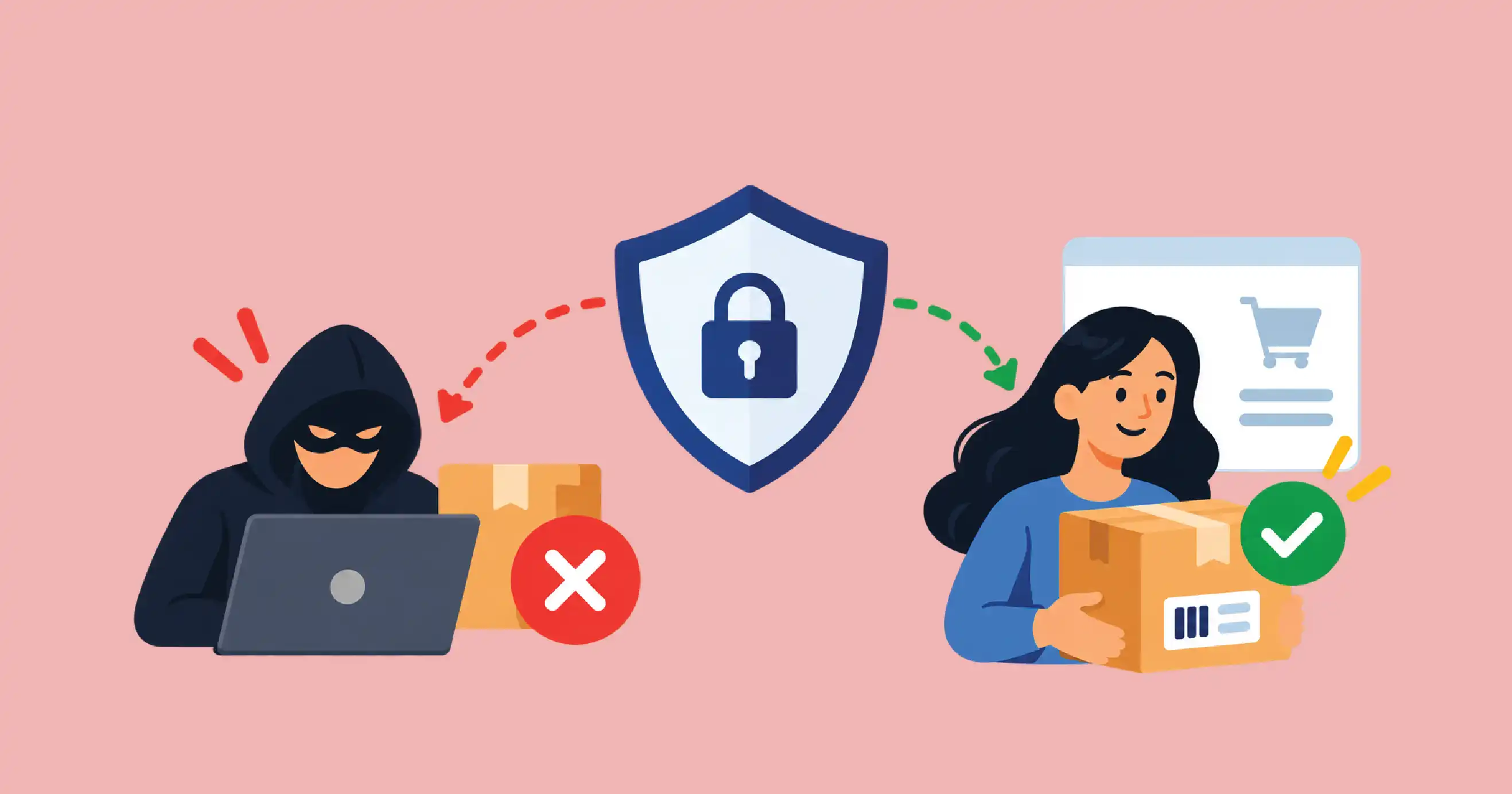
Use clear risk indicators. Incomplete addresses, invalid contact details, unusual order patterns or suspicious customer behavior may warrant a closer look. The exact indicators should reflect the risks the brand has observed in its own order history.
Prioritise high-risk orders. Review flagged orders before releasing them for fulfilment. Confirm missing details or contact the customer when necessary. Orders that pass verification can then move forward, while unresolved cases can be handled according to the brand's risk policy.
Use past cases to improve the process. Record the reasons for confirmed fraud, failed deliveries and suspicious orders. Review these patterns before each major sale and update verification rules where necessary.
Apply additional dispatch checks selectively. If certain products or order characteristics have a higher risk of errors or tampering, introduce checks for those cases. For electronics with serial-number tracking, verify that the recorded unit matches the product being packed.
The goal is to give genuine orders a clear path to fulfilment while directing attention towards orders that present a specific risk.
How we at Eshopbox help D2C brands manage festive electronics fulfilment
At Eshopbox, we help D2C brands manage inventory, order processing, shipping and returns through fulfilment operations designed to support day-to-day order handling. For electronics brands preparing for festive demand, several capabilities stand out.
Keep track of high-value inventory
Eshopbox supports inventory management across fulfilment centres, giving brands visibility into stock at different locations. This helps teams check availability and investigate discrepancies as order volumes rise.
For eligible electronics, Eshopbox supports serial-number scanning during order processing. The serial number is recorded against each order, creating a reference that brands can use to identify the specific unit dispatched to a customer.
Flag orders that need attention
Eshopbox's Risk Score feature assigns orders a high, medium or low risk level based on their likelihood of delivery failure. High-risk orders are placed on hold, and the flagged status is visible in the Eshopbox workspace.
Brands can then review these orders and decide what action is appropriate. Depending on the issue, this may involve correcting delivery details, confirming order information with the customer or cancelling an order that cannot be verified.
This allows brands to focus on orders that need attention instead of manually reviewing every shipment. Risk Score applies to orders for which Eshopbox Shipping is available.
This makes the division of responsibility clear: Eshopbox identifies and flags the risk; the brand reviews it and decides what to do.
Manage shipping across carriers
Eshopbox supports multi-carrier shipping, letting brands use the right shipping services for different destinations and order requirements. Reviewing carrier performance and delivery exceptions during a sale helps operations teams identify issues before they affect more shipments.
Process returns with product checks
When an electronics product is returned, Eshopbox can use the serial number recorded at dispatch to verify whether the returned unit matches the original shipment. If the numbers don't match, the product can be quarantined for investigation instead of being moved directly back into sellable inventory.
Get a consolidated view of fulfilment activity
Eshopbox's workspace brings order status, inventory information and fulfilment exceptions into one view. Teams can use this information to review processing progress, identify orders that are delayed and understand where operational issues are occurring. This gives fulfilment managers a common reference point when reviewing performance during festive sales.
Portronics is one example of how Eshopbox has helped an electronics brand manage festive sale demand.
How Portronics managed higher order volumes with Eshopbox
Portronics, an electronics and accessories brand, needed to manage growing order volumes while maintaining inventory accuracy and delivery performance.
Through its fulfilment partnership with Eshopbox, Portronics reported:
- 3x more orders fulfilled during sales, helping the brand manage higher demand during peak periods.
- 99.3% inventory accuracy, supporting better control over stock across fulfilment operations.
- 98.7% on-time delivery, helping maintain delivery performance as order volumes increased.
These results show how a structured fulfilment operation can help electronics brands handle sales spikes while keeping inventory and deliveries under control.
Conclusion
Successful festive electronics fulfilment depends on more than processing orders quickly. Brands need accurate inventory records, clear product identification checks, a practical way to review suspicious orders and a reliable process for handling returns and delivery issues.
Eshopbox brings together inventory management, warehouse operations, serial-number scanning for eligible electronics, Risk Score and multi-carrier shipping to help brands manage these challenges. Its workspace also gives teams visibility into order status and fulfilment exceptions, making it easier to identify issues that need attention.
Connect with our fulfilment expert today.
Talk to salesRelated Articles
5 fulfilment numbers ecommerce founders should check every morning
10 ecommerce shipping mistakes that quietly increase costs, delays and RTOs
How to protect beauty products from heat damage during shipping in India


Privacy Policy
Terms & Conditions