Get the latest from
Eshopbox




Introduction
In the early stages of building a D2C brand, fulfilment didn't feel complicated. If orders shipped on time and delivery costs were reasonable, fulfilment was considered sorted. Choosing between ecommerce fulfillment companies often meant picking couriers and getting parcels out as quickly as possible.This worked when brands were small order volumes were low, customers were patient, and most deliveries stayed within metro cities. A simple shipping process was enough to keep things running.As brands grew, this setup began to break down. Higher order volumes, demand from more cities, expansion across multiple sales channels, and frequent sales events made fulfilment increasingly difficult to manage.
Inventory mismatches, delays, returns, and delivery failures became harder to manage, and these issues started affecting customer experience and repeat orders.Fulfilment was no longer just about getting an order shipped. Brands needed better control over where inventory was stored, how orders were processed, which location fulfilled an order, and what happened when a delivery failed or a product was returned.
Let's examine how this fulfilment shift is shaping the growth of Indian D2C brands.
What fulfilment shifts are shaping the growth of Indian D2C brands?
D2C brands now approach fulfilment very differently than they did in the past. What began as a simple shipping setup has evolved into managing inventory, orders, warehousing, shipping, and returns as one connected process.As order volumes, sales channels, and customer reach grow, four key shifts are changing how ambitious brands think about fulfilment.
1. From shipping orders to managing end-to-end fulfilment
Early-stage brands typically rely on courier-led workflows focused on dispatching parcels. As brands grow, this approach starts falling short.Inventory needs to be tracked accurately, orders need to be picked and packed correctly, shipments need to be managed across multiple locations, and returns need to be processed and brought back into sellable inventory.
This is why growing brands move past standalone shipping tools and turn to ecommerce fulfilment services that manage the entire order journey — storing inventory, processing orders, shipping, delivering, and handling returns, all as one connected system
2. From centralised to distributed inventory
When most customers are concentrated in a few locations, storing inventory in one warehouse may work. But as brands start receiving orders from different parts of India, every order travelling from the same location adds unnecessary distance between inventory and the customer.
Growing D2C brands are hence moving towards distributed inventory, where stock is placed across multiple fulfilment centres pan-India based on where demand is coming from.Keeping inventory closer to customers can shorten transit time, improve delivery speed, and reduce shipping costs by decreasing the distance each order needs to travel.
3. From single-channel to multichannel fulfilment
D2C brands rarely depend on just one sales channel as they grow. Orders may come from the brand's own website as well as marketplaces such as Amazon, Flipkart, Myntra, and more.
Managing separate inventory and fulfilment processes for every channel adds another layer of unnecessary complexity. Stock mismatches can lead to overselling, cancellations, and poor inventory utilisation.Multichannel fulfilment brings these orders and inventory together, helping brands maintain a more connected view of stock while fulfilling orders across every sales channel.
.png)
4. From reactive to predictable fulfilment
A reactive fulfilment setup deals with problems only after they happen an inventory mismatch after an order is placed, a delayed shipment after the delivery promise is missed, or a returned product sitting unavailable for resale.
As brands grow, repeatedly fixing these problems becomes genuinely difficult to sustain.A more predictable fulfilment approach focuses on accurate inventory, structured order processing, clear visibility, defined service levels, and organised exception management. This allows brands to reduce uncertainty instead of constantly reacting to fulfilment issues after they occur.Together, these shifts show why growing brands increasingly need more than shipping. They need a fulfilment setup that can manage the entire order lifecycle as their business becomes more complex
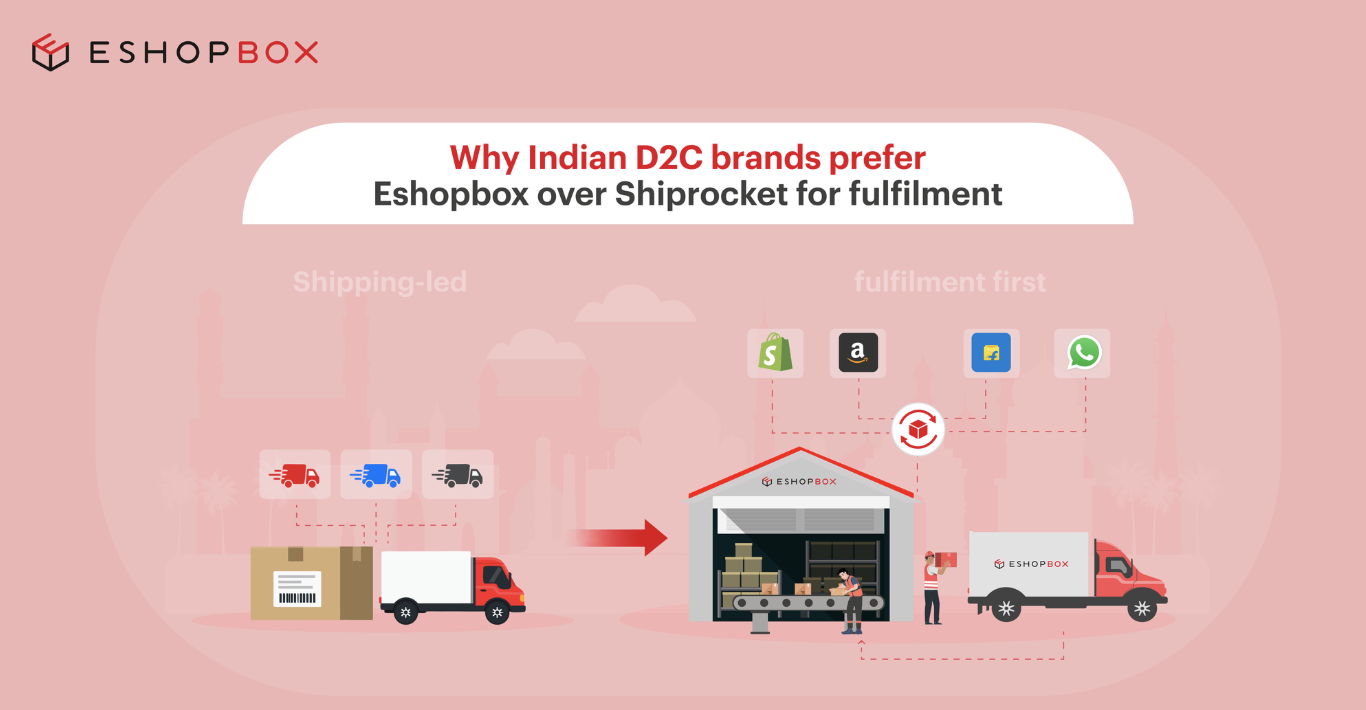
Shipping-led vs fulfilment-first systems: What's the real difference?
D2C brands often use shipping and fulfilment interchangeably, but the two operate very differently. The difference becomes more visible as order volumes grow and fulfilment gets more complex.
1. Shipping-led systems typically focus on:
- Courier aggregation and rate comparison
- Label generation and order dispatch
- Basic shipment tracking
- Managing shipping as a standalone task
2. Fulfilment-first systems are built to manage:
- Warehousing and inventory accuracy
- Inventory placement across fulfilment locations
- Pick-pack operations and order processing
- Shipping integrated into fulfilment workflows
- Multichannel order fulfilment
- Returns, NDRs, and exception handling
- Day-to-day fulfilment visibility and control
3. Why the difference matters
Shipping primarily manages the movement of a parcel after it is ready for dispatch. Fulfilment starts much earlier—with where inventory is stored, whether the right stock is available, and how accurately an order is picked and packed—and continues through shipping, delivery, and returns.Shipping-led systems can work when requirements are relatively straightforward. As brands expand across channels, locations, and larger order volumes, fulfilment-first systems provide the structure needed to manage the complete order lifecycle.
How does Eshopbox manage end-to-end fulfilment for growing D2C brands?
As D2C brands grow, they need ecommerce fulfillment companies that can manage more than individual shipping activities. Inventory, warehousing, order processing, shipping, and returns need to work as parts of the same fulfilment journey.
Eshopbox is designed around this fulfilment-first approach
.png)
.png)
1. Distributed warehousing and inventory management
Eshopbox enables brands to store and distribute inventory across fulfilment centres rather than depending entirely on a single warehouse.Inventory can be positioned closer to areas of customer demand, reducing the distance orders need to travel. At the same time, brands maintain visibility into their inventory, helping them understand what stock is available and where it is stored.This gives growing brands a more structured way to expand their reach while maintaining control over inventory.
2. Accurate order processing
Faster delivery starts with what happens before an order leaves the warehouse.Eshopbox uses structured picking, packing, and order-processing workflows to maintain accuracy as order volumes increase. This helps reduce fulfilment errors such as incorrect products or variants being shipped to customers.
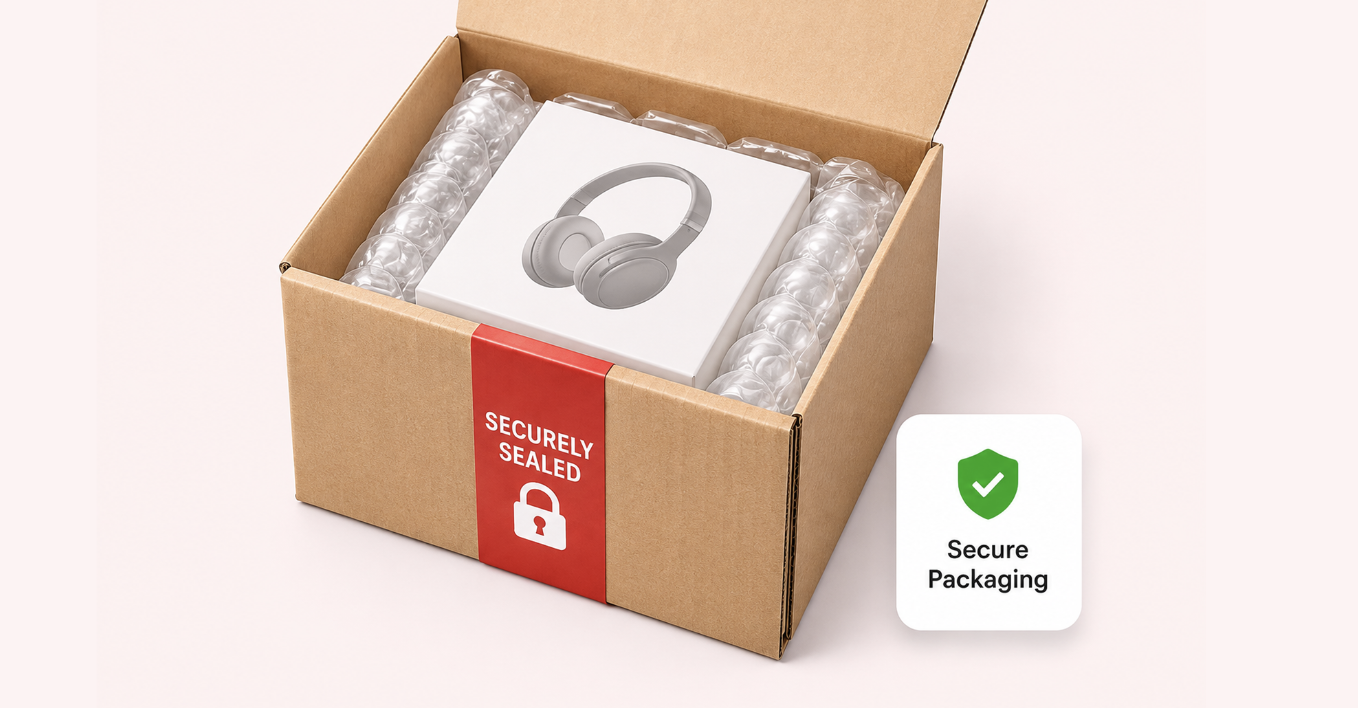
During peak periods, when order volumes increase quickly, defined fulfilment processes also help brands maintain consistent order processing instead of rebuilding capacity for every demand spike.
3. Multichannel fulfilment
As brands expand beyond their D2C website to marketplaces, managing separate inventory pools and order workflows can create stock mismatches and additional complexity.Eshopbox enables brands to manage inventory and fulfil orders across connected sales channels via a single source of truth.This helps brands maintain better inventory visibility while supporting website and marketplace orders without creating completely separate fulfilment processes for every channel.
4. Shipping and delivery management
Shipping remains an important part of fulfilment, but it works best when connected with everything that happens before and after dispatch.Eshopbox integrates shipping into the fulfilment process, from selecting an appropriate courier and dispatching an order to tracking the shipment and managing delivery exceptions.Because inventory placement, order processing, and shipping work together, brands can focus on the complete delivery outcome rather than treating courier selection as an isolated decision.
5. Returns management
The fulfilment journey doesn't always end with delivery. When customers return products, the speed at which those products are processed can affect how quickly sellable inventory becomes available again.Eshopbox manages return processing end-to-end, including quality checks and the movement of eligible returned products back into available inventory.This helps brands prevent sellable returned stock from remaining unavailable longer than necessary and creates a more structured reverse fulfilment process
6. Visibility and accountability
As fulfilment becomes more complex, brands need to know what is happening across inventory, orders, shipments, returns, and exceptions.Eshopbox provides visibility across the fulfilment journey while defined SLAs establish expectations around fulfilment performance.Structured processes for exceptions also provide clearer ownership when problems occur, reducing the need for brands to coordinate separately across multiple fulfilment activities.
What business outcomes does a fulfilment-first approach deliver?
The value of a fulfilment-first approach isn't simply having more capabilities. What matters is how those capabilities meaningfully improve the way a growing D2C brand manages inventory, delivers orders, handles returns, and expands across channels.
1. More predictable deliveries
Delivery reliability begins before a parcel reaches the courier.When inventory is positioned closer to customers and orders are processed within defined timelines, brands have better control over the factors that determine when an order gets delivered.This makes delivery performance less dependent on fixing problems after dispatch and more focused on creating a predictable fulfilment process from the beginning.
2. Better inventory control
When inventory is managed across multiple channels and fulfilment locations, inaccurate stock information can result in overselling, cancellations, and poor inventory utilisation.Connected inventory visibility gives brands a clearer view of available stock and helps maintain accuracy as channels and order volumes increase.
3. Faster delivery without depending only on couriers
Changing couriers isn't the only way to make delivery faster.If an order has to travel across the country from one warehouse, even a fast courier has a longer distance to cover. Distributed inventory addresses the problem earlier by positioning products closer to areas where customers are ordering.Shorter transit distances can help improve delivery speed while also reducing unnecessary shipping distance.
4. Better recovery from returns
Returned products represent inventory that cannot generate another sale until it is processed and made available again.Structured return processing, quality checks, and faster restocking help eligible products return to sellable inventory sooner. This makes returns an important part of inventory management rather than a separate process at the end of fulfilment.
5. Consistency across sales channels
Customers may discover a brand through its website, Amazon, Flipkart, Myntra, or another marketplace, but they still expect the brand to deliver consistently.A connected fulfilment setup helps brands maintain common inventory and fulfilment processes across these channels rather than building separate workflows for each one.This becomes increasingly important as brands add new sales channels.
6. Readiness for peaks and growth
Festive periods, campaigns, new product launches, and geographic expansion can cause order volumes and inventory requirements to change quickly.A fulfilment-first setup gives brands access to warehousing, processing capacity, inventory management, and shipping infrastructure without having to rebuild their fulfilment setup every time demand changes.This helps brands handle growth while maintaining greater consistency across fulfilment processes.
How Shiprocket supports fulfilment needs
Shiprocket plays a well-recognised role in the Indian D2C space, especially for brands looking to get their shipping running smoothly. Its platform is built to simplify dispatch and help brands move away from manual shipping processes without a heavy operational lift.
1. Strength in shipping-led workflows
Shiprocket's strength lies in simplifying ecommerce shipping through courier aggregation, shipping automation, label generation, order dispatch, and tracking all within a single interface.For brands primarily focused on organising and automating shipping, this can meaningfully reduce the effort required to manage individual courier relationships and day-to-day dispatch activities.
2. Warehousing and fulfilment services
Shiprocket also provides warehouse fulfilment services for brands that need storage, order processing, and dispatch support in addition to shipping.This gives brands a practical route to extend beyond pure shipping when their requirements include outsourced warehousing and fulfilment.
3. Matching the partner to the requirement
Rather than looking at the choice only in terms of business size, brands should weigh the complexity of their fulfilment requirements.A brand focused mainly on courier aggregation and shipping automation will evaluate a partner very differently from one that needs distributed inventory, multichannel fulfilment, structured returns, fulfilment SLAs, and connected visibility across the entire order journey.This is exactly where understanding the difference between a shipping-led and fulfilment-first approach becomes important.

Conclusion: choosing the right fulfilment partner
As Indian D2C brands grow, fulfilment decisions move well beyond courier selection and shipping costs.
Brands need to consider where inventory will be stored, how accurately orders will be processed, how different sales channels will share stock, how delivery exceptions will be handled, and how quickly returned products can become sellable again.The right ecommerce fulfilment partner, isn't decided by shipping rates alone. Brands need to weigh inventory management, warehouse fulfilment services, order processing, shipping, returns, visibility, SLAs, and the ability to support changing volumes and channels.
Eshopbox meets these requirements through a fulfilment-first model that connects distributed warehousing, inventory management, multichannel order processing, shipping, returns, and accountability within a single, unified setup.
Connect with our fulfilment expert today.
Talk to salesRelated Articles
How to choose the best warehouse in Kolkata for your business
7 Reasons Brands Are Choosing Eshopbox to Scale Faster
Packaging intelligence: How smart packaging decisions improve profitability?


Privacy Policy
Terms & Conditions