Get the latest from
Eshopbox




Introduction
Ecommerce in India is no longer a metro-first game. Demand is rising sharply in tier-2 and tier-3 markets, and brands are expected to deliver there with the same speed and accuracy as they do in Mumbai or Delhi.This is where most fulfilment strategies start to break. It's rarely a demand problem it's an infrastructure one. Orders routed from a single, distant warehouse take longer to reach these markets, cost more to ship, and are more likely to fail on the first attempt.
This guide breaks down why Kolkata has emerged as a strategic warehousing hub for eastern India, what to evaluate before choosing a facility there, the mistakes brands commonly make in the process, and how Eshopbox's Kolkata warehouse is built to solve for all of it.
Kolkata: The Strategic Gateway to Eastern India's Ecommerce Growth
Kolkata has emerged as one of eastern India's most important warehousing and logistics hubs. Facilities here no longer function as passive storage they operate as active distribution centres, helping brands reach customers faster and run deliveries more predictably.
Gateway to eastern and emerging markets
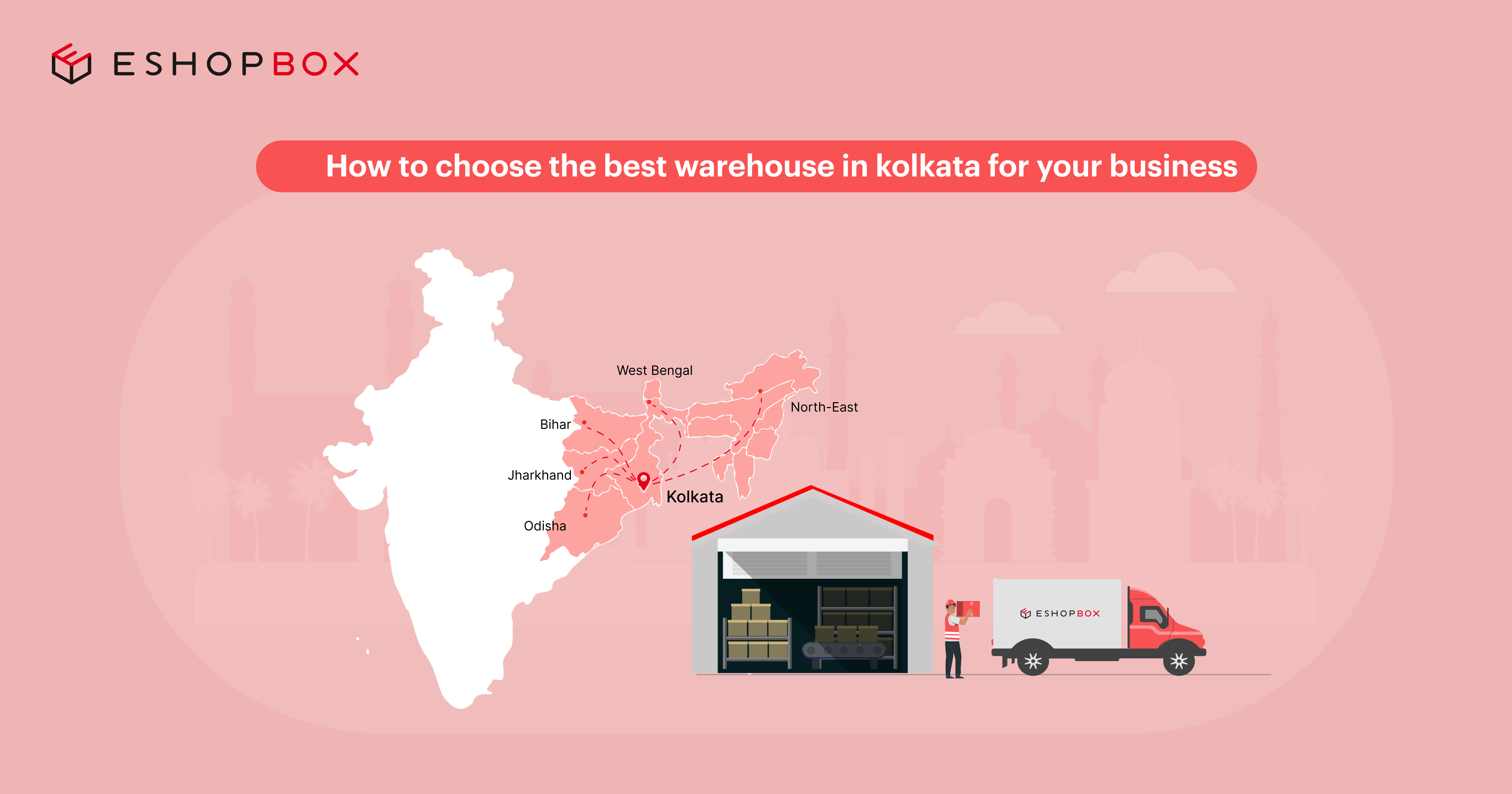
Kolkata sits at the entry point to eastern and north-eastern India. From here, brands can reach West Bengal, Bihar, Odisha, Jharkhand, and the North-East without routing goods through distant hubs a decisive advantage in tier-2 and tier-3 cities, where delivery speed and reliability directly shape whether a customer buys again. The numbers back this up: Kolkata's warehousing market has recorded around 7% year-on-year growth in leasing and rentals, driven largely by ecommerce and logistics demand.
Built on strong connectivity
Location alone doesn't win deliveries connectivity does. Kolkata is served by major highways and rail networks that keep goods moving efficiently across eastern India, holding transit timelines and transportation costs steady. The city also connects to the Kolkata–Haldia port system, supporting both domestic distribution and international trade. In 2025, Kolkata Port recorded 16% growth in cargo handling, according to a Times of India report — a clear signal of its expanding role in regional logistics, and a further boost to inbound and outbound movement for brands operating out of the city.
Together, reach and connectivity make Kolkata a strategic, reliable base for fulfilling eastern-market demand.
What to Consider When Choosing a Warehouse in Kolkata
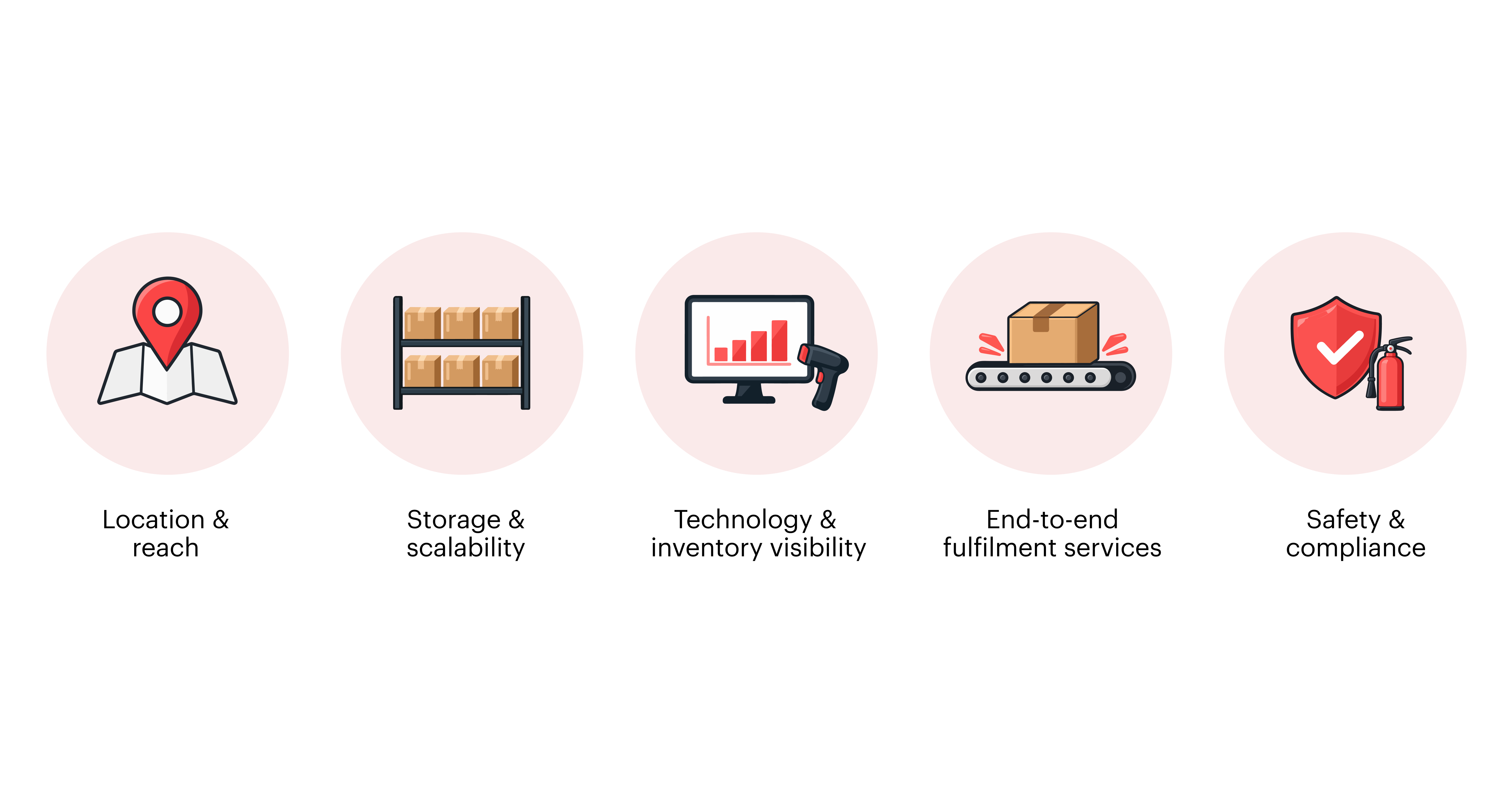
Choosing the right warehouse involves more than finding available storage space. The decision directly shapes delivery cost, order accuracy, and how easily a business can scale over time. Here's what actually matters:
1. Location & reach
Proximity to demand centres is the starting point, not the whole answer. The real question is how many regions the facility can serve efficiently. Wider reach means faster, more consistent deliveries into tier-2 and tier-3 cities not just the city the warehouse sits in.
2. Storage & scalability
Capacity needs to be planned for where the business is headed, not just where it stands today. Flexible layouts that absorb sales-event and festive-season spikes matter far more than raw square footage.
3. Technology & visibility
Real-time inventory tracking and clear order visibility aren't nice-to-haves anymore — they're the baseline. Without them, stock mismatches and fulfilment errors are only a matter of time
4. Fulfilment services
Storage alone isn't enough. Brands need end-to-end fulfilment warehouse service — picking, packing, dispatch, and returns handled within one operation, not stitched together across vendors.
5. Safety & compliance
Standard security protocols, fire safety systems, and adequate insurance coverage aren't box-ticking exercises. They're what keep inventory protected and operations running when something goes wrong.
Common Mistakes Businesses Make While Selecting a Warehouse
Choosing purely on cost
This is the most common mistake, and the most expensive one. Lower storage or fulfilment charges look attractive upfront, but they usually come bundled with slow order processing, limited services, or unreliable deliveries. Those problems don't stay contained they surface later as returns, complaints, and extra manual work, pushing overall costs higher than they would have been with the right partner from the start.
Ignoring how the facility handles growth
Order volumes rarely stay flat. A warehouse that can't scale during sales events or festive-season peaks slows down the exact moments that matter most. The same blind spot shows up in tracking: without the right systems in place, inventory and orders get harder to monitor as volumes climb, and delays and errors follow.
Avoiding both mistakes comes down to the same principle: look past the price tag and check what's actually running underneath it. Is the space used efficiently? Is there technology in place to keep operations visible at every stage? Those two questions matter more than any number on a quote.
How Does Eshopbox's Warehouse in Kolkata Address These Challenges?
Eshopbox's warehouse in Kolkata is a technology-enabled fulfilment hub trusted by hundreds of brands to manage inventory and fulfilment across sales channels. Here's how it lines up against the criteria above:
- Location & reach: The Kolkata centre is one node in Eshopbox's nationwide network, spanning 29,000+ PIN codes. Brands get eastern-market reach without building or managing a warehouse themselves — plus expanded two-day delivery coverage and lower logistics costs than a centralised setup.
- Storage & scalability: Because the model is a distributed, standardised network rather than one fixed-capacity facility, it holds up through demand spikes and new-region expansion — the exact points where single-warehouse setups strain.
- Technology & visibility: A unified dashboard tracks inventory, orders, and fulfilment performance in real time, translating into 99.5%+ order accuracy and on-time dispatch rates across channels.
- Fulfilment services & safety: Receiving, picking, packing, dispatch, and returns run as one standardised workflow — backed by the security, fire safety, and insurance standards covered earlier.
The result: a warehouse that answers each of the five criteria directly, backed by numbers rather than claims.
Conclusion
Choosing a warehouse today is no longer just an operational decision — it shapes how easily a business can grow, enter new regions, and deliver reliably. Kolkata's location and connectivity make it a strong base for eastern-market fulfilment, but location alone isn't enough; the operation behind it needs to scale, stay visible, and hold accuracy as order volumes rise.
Eshopbox's Kolkata warehouse combines the two — a strategically placed facility backed by a fulfilment-first, technology-driven model — so brands are set up not just for today's demand, but for what comes next.
To see how this works in practice, brands can sign up for Eshopbox's free workspace and explore fulfilment coverage and inventory visibility at no cost.
Connect with our fulfilment expert today.
Talk to salesRelated Articles
7 Reasons Brands Are Choosing Eshopbox to Scale Faster
Packaging intelligence: How smart packaging decisions improve profitability?
Eshopbox vs WareIQ: Choosing the right partner for multi-channel growth


Privacy Policy
Terms & Conditions