Get the latest from
Eshopbox




Introduction
The year-end season brings excitement across ecommerce, with Christmas, New Year, and festive sales leading to a big jump in online shopping. For every ecommerce brand, this period feels like the biggest opportunity of the year, as customers are ready to spend, discounts are everywhere, and order volumes multiply. It’s a phase of growth but also a period when brands face pressure to manage inventory, pack orders accurately, deliver faster, and meet customer expectations.
But one important question remains: do more orders always mean real growth? While year-end sales create opportunity, they don’t always convert into profit. Delays in shipping, high returns, and rtos can slowly eat into margins, especially when ecommerce fulfillment is not set up to handle scale. Real growth is built on reliable operations, strong processes, and customers who return because they trust the brand.
Let’s look at what really happens when order volumes surge, and why sales spikes don’t always guarantee growth.
Why sales spikes don’t guarantee growth
When sales increase during the year-end season, many ecommerce brands see higher revenue at first. What often goes unnoticed is that costs rise at the same time. More orders do not always mean more profit because every additional order increases fulfilment effort, labour cost, and delivery expense.
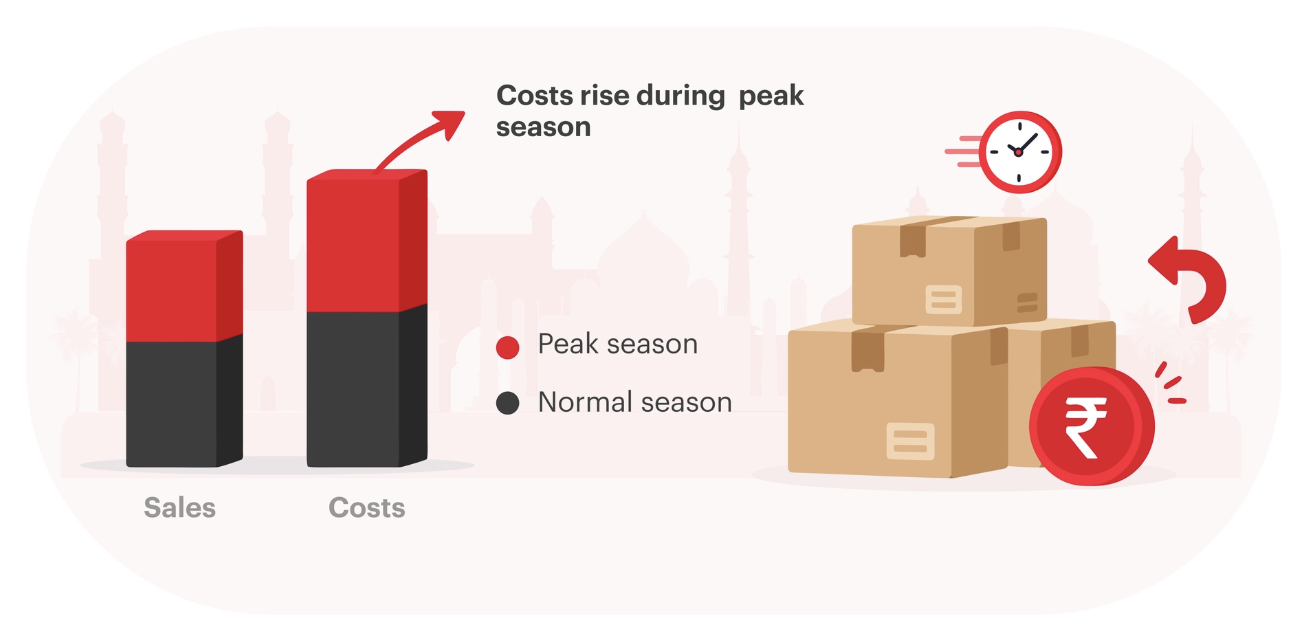
When ecommerce fulfillment systems are designed for normal order volumes, brands often rely on overtime, manual work, and temporary fixes during peak periods. To prevent delivery delays, faster shipping options may also be used, which can increase shipping costs and further reduce margins. As a result, revenue grows, but profit does not always grow at the same pace
How operational issues reduce revenue after the sale
- Delivery delays, returns, and RTOs lead to refunds and reverse shipping costs, directly lowering revenue and tying up working capital. Eshopbox’s RTO guide specifically explains how failed deliveries create forward and return shipping costs, blocked inventory, and additional processing expenses.
- As order volumes rise, customer support requests also increase, especially for delivery delays, failed attempts, and return updates, adding to operational costs. Eshopbox’s NDR guide covers failed deliveries, delayed resolution, increased costs, and their effect on customer experience.
- When warehousing and fulfillment services are stretched, small fulfilment errors occur more frequently and repeat across hundreds or thousands of orders. This Eshopbox blog is directly about peak-season pressure, higher volumes, warehouse capacity, order accuracy, and fulfilment challenges.
- These repeated issues weaken customer trust, reduce repeat purchases, and lower the long-term value of customers acquired during sales periods.
This is why sales spikes alone do not guarantee growth. Sustainable growth depends on ecommerce fulfillment and shipping ecommerce systems that can manage higher volumes while keeping costs, delivery timelines, and customer experience under control.
How to Prepare for 2027 Ecommerce Growth?
As brands look toward 2026, growth will increasingly be shaped by how well daily operations perform under pressure, not by how hard sales are pushed. Higher order volumes are now the standard, and customers expect fast, accurate deliveries even during peak periods, leaving very little room for operational mistakes.
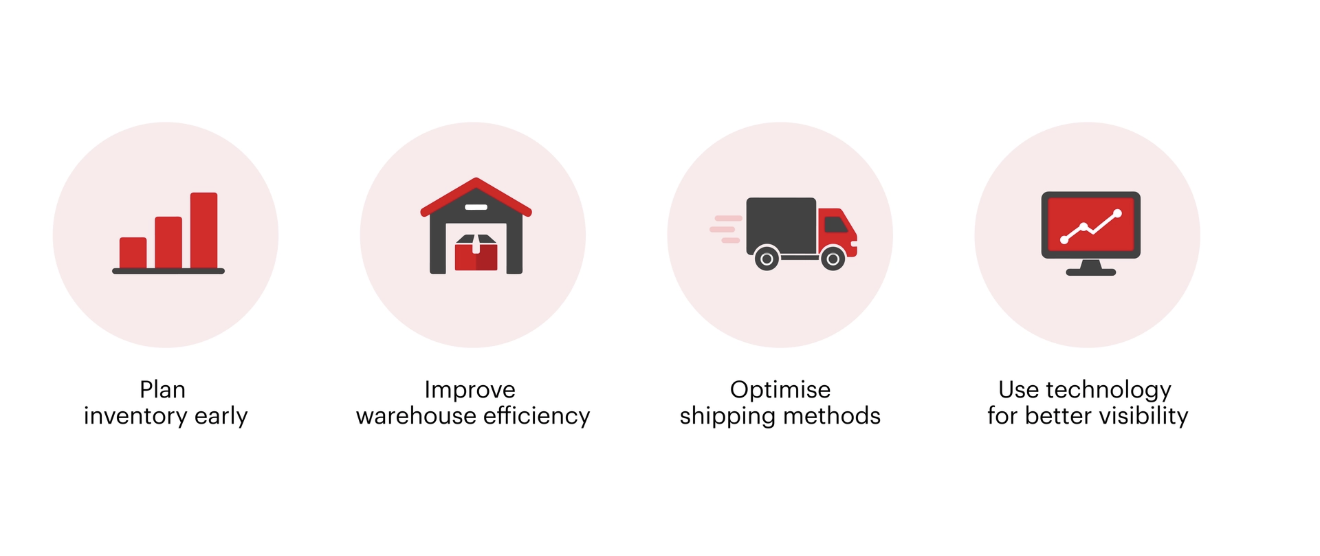
Let’s now look at the key operational areas that matter most at scale. Warehouse efficiency determines how smoothly orders are processed during high volumes, shipping methods decide how quickly and reliably orders reach customers, and software brings these elements together by giving teams the visibility and control needed to manage growth without disruption.
1. How to Improve Warehouse Efficiency?
Warehousing and fulfillment services become critical as order volumes increase, especially during sales periods when fulfilment pressure is at its highest. When inventory planning and warehouse capacity are not aligned with demand, order processing slows down, errors increase, and fulfilment costs rise. Inefficient warehouses lead to delayed dispatch, incorrect shipments, and higher dependence on faster shipping options, all of which reduce margins and affect customer experience. Improving warehouse efficiency helps brands process higher volumes smoothly, maintain order accuracy, and control costs as they scale.
1.1 How Eshopbox helps brands improve warehouse efficiency
Eshopbox helps brands strengthen warehouse operations by planning inventory placement ahead of peak seasons and distributing stock across regional fulfilment centres instead of relying on a single location. Orders are picked, packed, and dispatched from the nearest warehouse, which reduces processing time and keeps order flow stable during sales rushes. Automation across inventory tracking, picking, and packing reduces manual errors and improves speed, allowing teams to handle higher volumes without bottlenecks.
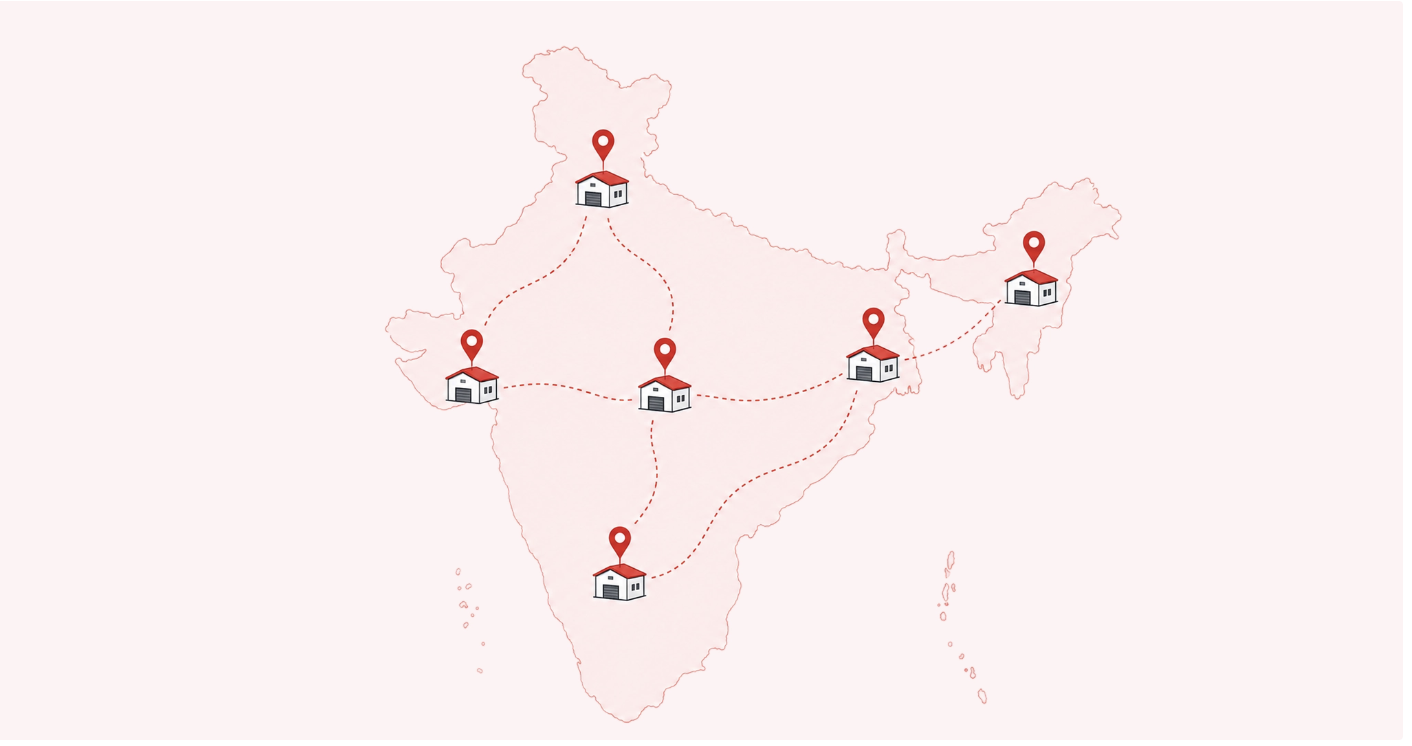
Operational impact observed across Eshopbox fulfilment centres:
- High order accuracy of 99.96%, supported by barcode-based picking and system-led warehouse processes that reduce manual errors.
- Lower shipping and fulfilment costs, with brands seeing up to 44% reduction in shipping expenses by avoiding long-distance deliveries.
- Consistent order processing performance, with 99.6% on-time order processing, helps reduce dispatch delays even during peak sales periods.
- Wide delivery reach across 28,000+ PIN codes, allowing brands to serve customers nationwide without compromising delivery timelines.
These improvements help ecommerce brands manage high order volumes with greater control, protect margins during sales, and deliver a reliable post-purchase experience that supports repeat growth.
2. What shipping methods help deliver faster
As order volumes grow, faster delivery often feels like a courier problem, but in reality, it usually starts much earlier in the fulfilment process. When orders are shipped from faraway warehouses, they spend more time in transit, pass through more hubs, and face a higher risk of delays or failed attempts. This increases shipping costs and puts pressure on brands to choose faster shipping options just to meet promised timelines.
2.2 How Eshopbox enables faster shipping at scale
Eshopbox uses zone-based fulfillment to place inventory closer to customers, allowing orders to ship from the nearest warehouse rather than traveling across regions. This shortens transit time and reduces shipping costs without changing courier partners. Smart warehouse processes also ensure orders are picked, packed, and dispatched quickly, preventing backlogs and reducing delivery failures from late handovers.
Impact on delivery performance:
- Faster deliveries for most customers, with around 72% of orders delivered within two days, made possible by regional inventory placement and reduced shipping distances.
- More consistent on-time delivery, achieving 96% on-time delivery, ensuring dependable dispatch timelines even during high-volume and peak sale periods.
- Optimised shipping costs, with brands recording up to 28% reduction in shipping expenses by cutting down inter-zone, predicting demand, and optimizing regional inventory
- Higher delivery success and lower RTO impact, driving a 41% improvement in delivery success rates through faster dispatch, proactive tracking, and fewer delivery attempts.
Together, these improvements help brands deliver faster in a predictable and cost-efficient way, even when order volumes increase.
3. How to use software for better ecommerce growth
As brands grow, managing operations gets harder when everything is scattered across different tools and spreadsheets. It becomes difficult to know how much inventory is available, why orders are getting delayed, or where most returns are happening. Without this clarity, brands react to problems instead of preventing them, which leads to more errors, slower fulfillment, and higher costs. The right fulfillment software helps brands see what’s happening across warehousing and fulfillment services and make better decisions as order volumes increase.
3.3 How Eshopbox software supports operational growth
Eshopbox’s fulfilment software brings warehousing, inventory, and shipping into one connected system, giving brands a clear view of how orders move from checkout to delivery. Inventory is updated in real time across locations, orders are automatically routed to the best warehouse, and teams can track performance without constant manual intervention. This helps brands spot issues early, manage scale more confidently, and improve day-to-day operations without adding more people.
Operational impact of using connected fulfilment software:
- Real-time inventory visibility across warehouses and sales channels
- Faster order processing through automated order routing and dispatch
- Lower fulfilment errors due to system-led workflows
- Better control over returns and RTOs with clear tracking and insights
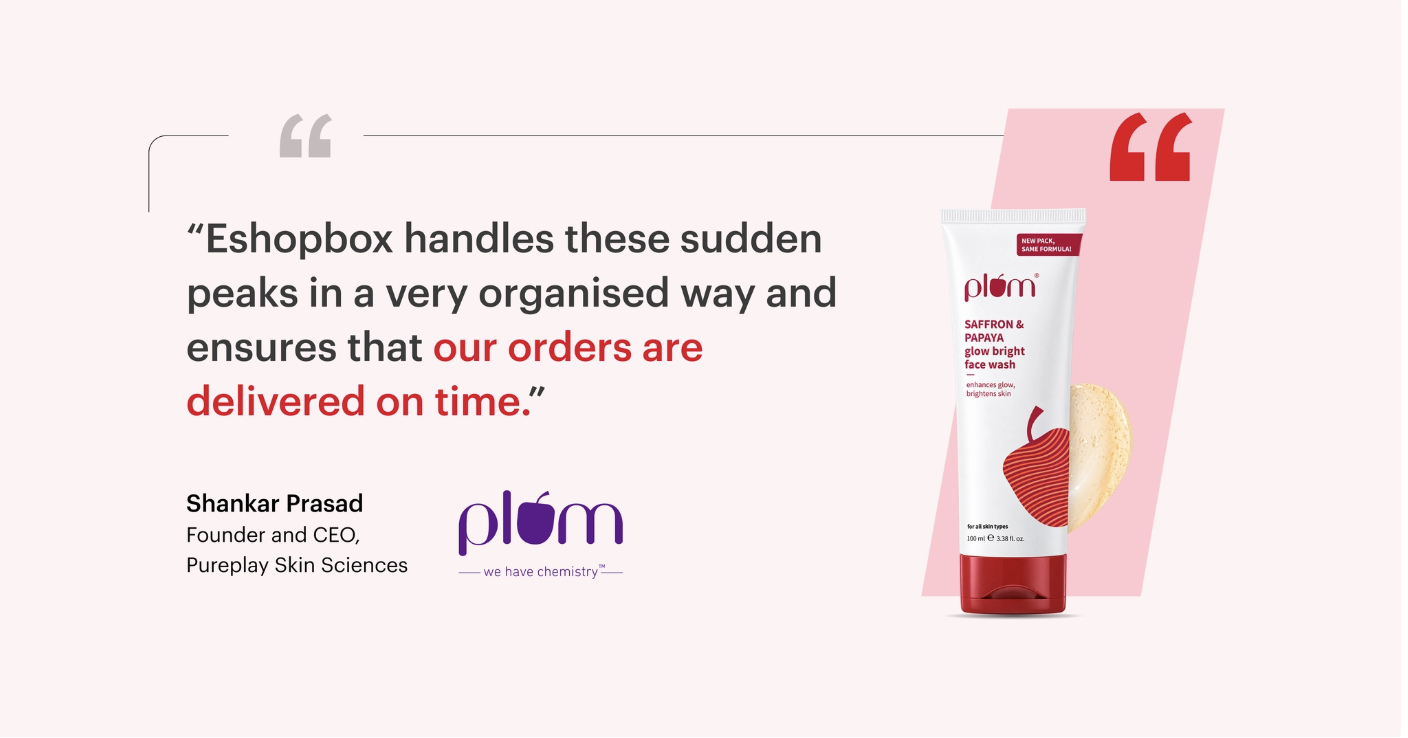
By using software to connect fulfilment operations, ecommerce brands can scale with more predictability, reduce operational stress, and turn growth into a controlled, repeatable process rather than constantly responding to operational issues.
What actually turns festive buyers into repeat customers?
Year-end sales often bring many first-time buyers, but most don't return after the sale ends. The difference between a one-time festive buyer and a repeat customer is rarely the discount—it's the experience that follows the purchase.
Customers return when orders arrive on time, packaging is correct, returns are easy, and communication stays clear throughout delivery. Delays, confusing updates, or slow refunds break trust, even when the product is good.
For ecommerce brands, growth depends not just on selling more during sales but on delivering a smooth post-purchase experience. Ecommerce fulfillment, warehousing services, and shipping operations all directly shape this experience after checkout.
Brands that focus on reliability during peak periods build confidence with new buyers. Over time, this trust drives repeat purchases, reduces return-related losses, and improves the long-term value of customers acquired during festive sales.
Conclusion: Turning sales spikes into repeat business
End-of-year sales can bring a surge of new customers and higher order volumes, but lasting growth depends on what happens after the sale. Festive shoppers return only when their post-purchase experience is smooth from checkout to delivery, and that experience is shaped largely by fulfilment, warehousing, and shipping operations. Brands that treat peak seasons as a stress test for their operations, rather than just a revenue opportunity, are better positioned to build long-term value.
By improving warehouse efficiency, choosing smarter shipping methods, and strengthening ecommerce fulfillment with better visibility and control, brands can deliver consistently—even during high-demand periods. When orders arrive on time, returns are handled smoothly, and communication stays clear, customers gain confidence. This trust turns one-time festive buyers into repeat customers, helping brands move from short-term sales spikes to steady, sustainable growth in 2026 and beyond.
Connect with our fulfilment expert today.
Talk to salesRelated Articles
Why Indian D2C brands prefer Eshopbox over Shiprocket for fulfilment
How to choose the best warehouse in Kolkata for your business
7 Reasons Brands Are Choosing Eshopbox to Scale Faster


Privacy Policy
Terms & Conditions