Get the latest from
Eshopbox




What does it actually take to offer 1-day delivery? A fulfilment checklist for ecommerce brands
Online shoppers increasingly expect their orders to arrive quickly. For ecommerce brands, meeting this expectation means looking beyond the delivery speed promised by a courier.
Express delivery alone does not guarantee that an order will reach the customer within a day. The product must be available at the right location, the warehouse must process the order on time, and the carrier must be able to complete the delivery within the promised window.
So, what does it actually take to offer 1-day delivery? Here are the key things ecommerce brands need to evaluate before making that promise.
What needs to be in place before promising 1-day delivery?
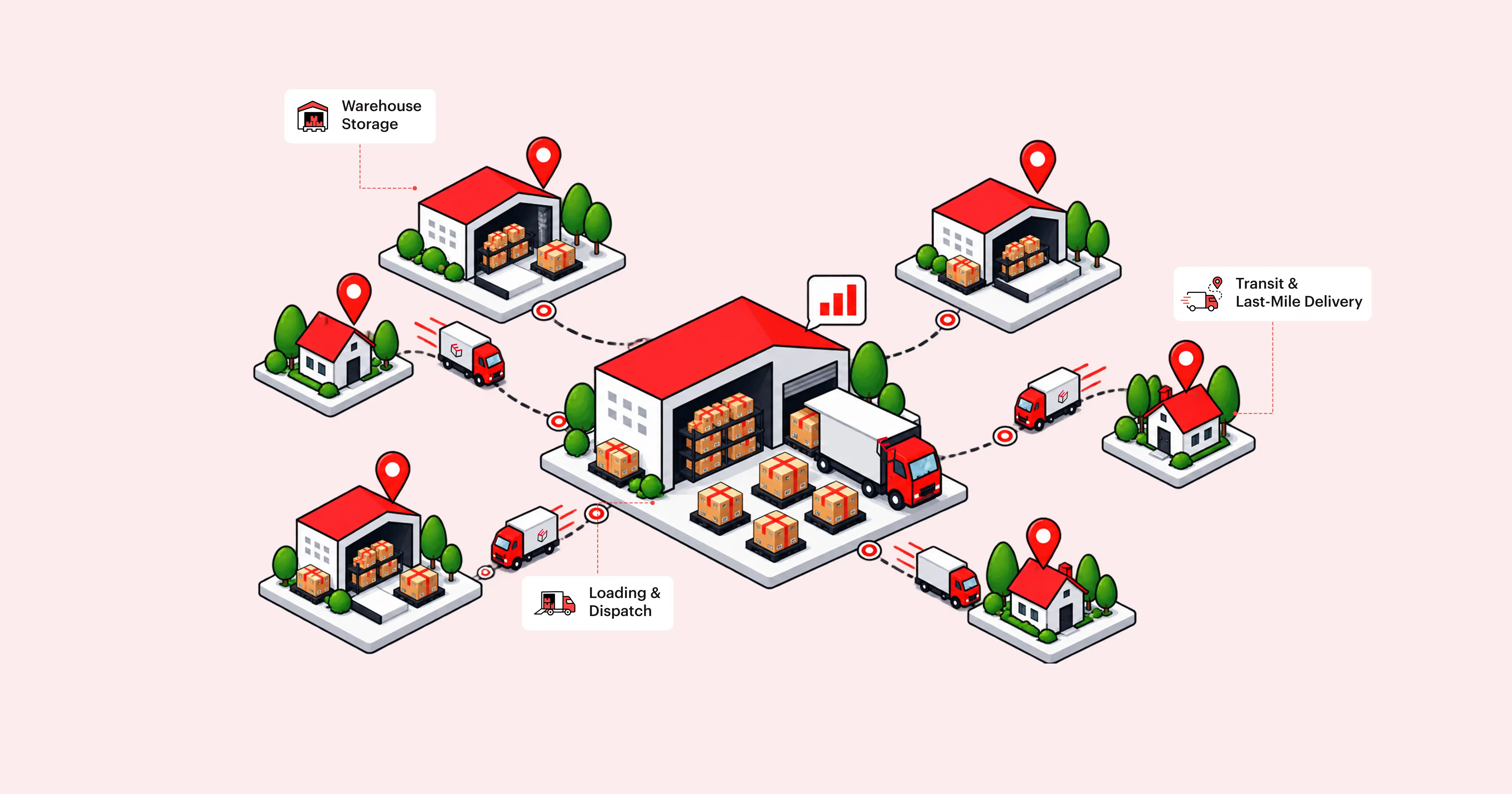
The delivery timeline is influenced by decisions made well before a customer checks out. Where inventory is stored, which locations can be served from each fulfilment centre and what delivery options are available all affect whether an order can reach its destination within one day.
Consider a brand that stores all its inventory in one warehouse. A customer placing an order from a nearby city may receive it quickly, while another customer several hundred kilometres away may need to wait longer. Using a faster courier alone may not bridge that difference.
Before offering 1-day delivery, brands need to understand which customer locations they can serve within the promised timeframe and whether the required products are available at suitable locations.
This means evaluating four things:
- Inventory location: Is the product stored close enough to the customer?
- Serviceability: Can the fulfilment centre serve the destination within the required timeframe?
- Inventory availability: Is sufficient stock available at the location that will fulfil the order?
- Delivery options: Which carrier services and delivery speeds are available for that destination?
These factors determine where a 1-day delivery promise is feasible. Brands can then define eligible delivery locations and set realistic expectations at checkout.
1) Is your inventory in the right places?
Inventory placement plays a major role in delivery speed. If products are stored far from the customers who order them, shipments may need to travel longer distances, increasing both transit time and shipping costs.
However, distributing inventory across multiple warehouses without a clear plan can create other problems. Stock may accumulate at locations with limited demand while popular products run out at fulfilment centres serving high-order regions.
The objective is to match inventory placement with customer demand.
Start by reviewing where your orders originate and which products sell most frequently in each region. This helps identify the locations where keeping inventory closer to customers could have the greatest impact on delivery timelines.
Consider these questions:
- Which cities and regions generate the most orders?
- Which products sell fastest in each region?
- Is sufficient inventory available near major demand centres?
- How will orders be fulfilled when a product runs out at its assigned location?
- How often should inventory placement be reviewed as demand changes?
For example, a brand receiving a high volume of orders from southern India may benefit from positioning selected fast-moving products at a fulfilment centre closer to that demand. This can reduce the distance those orders need to travel.
Inventory availability across locations also matters. If a product is unavailable at the nearest fulfilment centre, the order may need to be allocated elsewhere, potentially affecting the delivery commitment.
A distributed fulfilment setup, supported by inventory visibility across locations, helps brands make more informed decisions about where stock should be stored and which orders each centre can fulfil.
2) Can your fulfillment operation process the order fast enough?
Once an order is placed, the time it takes to move from the ecommerce platform to carrier handover becomes critical.
An order may be eligible for 1-day delivery based on its destination and inventory availability, but delays inside the warehouse can still affect the outcome.
Consider the steps involved:
Order received → Order sync → Allocation → Picking → Packing → Dispatch → Carrier handover

Each stage needs to happen within a planned timeframe.
Order synchronisation ensures that the warehouse receives the order details. Allocation determines which fulfilment centre will handle it. Picking and packing prepare the shipment, while dispatch and carrier handover move it into the delivery network.
If any stage takes longer than expected, the time available for transportation decreases.
For instance, an order placed in the morning may be eligible for same-day carrier handover. If it remains unallocated until late afternoon or misses the warehouse's processing cut-off, it may not leave until the next pickup.
What should brands check?
- How quickly do orders reach the warehouse after checkout?
- How long does allocation take?
- Are picking and packing completed within the expected timeframe?
- Which orders are approaching their dispatch deadlines?
- Are warehouse processing schedules aligned with carrier pickup times?
Ecommerce brands should define processing timelines for each stage and monitor orders that fall behind schedule. They should also plan warehouse capacity around expected order volumes, particularly during sales and seasonal peaks.
For brands evaluating this capability, it is important to understand the applicable processing terms and how they fit into the end-to-end delivery commitment.
Fast processing gives shipments more time to reach customers. It is an essential part of 1-day delivery, but it does not guarantee that the carrier will complete delivery within one day.
3) Does your carrier network support the promise?
Once an order leaves the warehouse, carrier performance becomes a major factor in the delivery timeline.
A carrier may offer fast delivery in one city but have limited coverage or longer transit times in another. Pickup schedules, local delivery networks and destination serviceability can all affect whether an order reaches the customer as promised.
Brands need to evaluate carrier performance at the destination level rather than relying only on general delivery estimates.
Here is what to review:
- Pincode serviceability: Can the carrier deliver to the customer's location within the required timeframe?
- Regional performance: How consistently does the carrier meet delivery timelines in that area?
- Pickup schedules: Will the carrier collect the shipment before the dispatch cut-off?
- Available services: Does the carrier offer a delivery option that supports the promised timeline?
- Alternative carriers: What happens if the preferred carrier cannot serve the destination or is experiencing delays?
For example, a brand may use one carrier for local deliveries and another for destinations where a different carrier has better coverage or transit performance. The allocation decision should reflect actual serviceability and delivery requirements.
A multi-carrier shipping setup can give brands more flexibility in assigning shipments. Automatic carrier allocation can further help apply the relevant rules based on factors such as destination, serviceability and available shipping options.
The key is to ensure that the delivery promise shown to the customer reflects the service available for that particular order.
What happens when the 1-day promise is at risk?
Even a well-planned fulfilment operation will encounter exceptions. Inventory discrepancies, missed pickups, carrier delays and failed delivery attempts can affect individual orders.
The difference lies in how quickly the team identifies these problems and responds to them.
If a shipment remains at the warehouse beyond its expected dispatch time, the team needs to know about it before the delay affects the delivery commitment. Similarly, a shipment that has stopped moving after carrier handover may need investigation.

Brands should monitor the following:
- Orders that have not progressed through processing as expected
- Shipments approaching dispatch deadlines
- Inventory shortages at the assigned fulfilment centre
- Delayed carrier pickups
- Shipments with stalled tracking updates
- Failed delivery attempts and NDRs requiring action
These exceptions need clear ownership. A processing delay may require warehouse intervention, while an NDR may need customer confirmation or delivery rescheduling. Carrier-related delays may require follow-up with the shipping partner.
Order tracking, exception alerts and views of orders requiring attention help teams identify these situations earlier. Instead of waiting for a customer to report a missed delivery, the team can investigate the issue and take the appropriate next step.
Real-time visibility is particularly useful when order volumes increase, because manually checking every shipment becomes difficult to sustain.
For brands offering 1-day delivery, exception management should be part of the daily fulfilment process, rather than a task that begins only after a delivery commitment has been missed.
Does 1-day delivery actually make financial sense?
Faster delivery can improve the customer experience, but the operational cost needs to be evaluated alongside the potential benefits.
Using an expedited shipping service for every order may increase costs unnecessarily. In some cases, reducing the distance a shipment travels can be a more effective way to improve delivery speed.
Brands should assess the main cost drivers before extending 1-day delivery across their entire customer base.
Shipping distance and zones: Local and zonal shipments may cost less and travel faster than shipments crossing the country. Inventory placement can influence how many orders fall into each category.
Expedited shipping: Faster carrier services may carry higher charges. Evaluate where these services are necessary and whether the delivery benefit justifies the additional expense.
Inventory placement: Distributed inventory can reduce shipping distances, but it also requires careful stock allocation across locations. The cost of holding inventory at multiple fulfilment centres should be considered alongside potential shipping savings.
Packaging dimensions: Oversized packages can increase chargeable weight and shipping expenses. Suitable packaging helps control costs while protecting products during transit.
RTOs and failed deliveries: Failed delivery attempts can generate additional shipping and handling expenses. Better address validation, delivery visibility and timely NDR management can help reduce avoidable failures.
Warehouse capacity: Faster processing may require changes to staffing, workflows, operating schedules or warehouse capacity. These costs should be included when evaluating the feasibility of a 1-day delivery service.
A useful approach is to compare the total fulfilment cost of eligible orders across different regions and delivery options. Measure delivery performance alongside shipping expenses to understand which changes improve speed without creating disproportionate costs.
The cheapest way to achieve faster delivery isn't necessarily paying for faster shipping. It can be reducing the distance the order needs to travel in the first place.
How Eshopbox supports faster delivery
Offering 1-day delivery requires coordination across inventory, warehouse operations, carrier selection and shipment monitoring. Eshopbox supports these activities through its fulfilment infrastructure and related capabilities.
- Distributed fulfilment centres: Storing inventory across suitable locations can help brands serve customers closer to where demand occurs.
- Inventory visibility: Visibility across fulfilment centres helps teams understand stock availability and make informed allocation decisions.
- Fulfilment-centre allocation: Assigning orders based on inventory availability and customer location helps determine the appropriate location for fulfilment.
- Order processing: Streamlined order workflows and a stated 1-day order-processing capability can support faster movement from order receipt to dispatch, subject to applicable terms.
- Multi-carrier shipping: Multiple carrier options and automatic carrier allocation help brands select suitable services based on destination and shipping requirements.
- Order tracking and exception alerts: Shipment visibility and views of orders requiring attention help teams identify delays and respond to exceptions.
- Inventory across sales channels: Managing inventory across channels through a shared inventory pool can help improve stock visibility and reduce the risk of conflicting availability information.
These capabilities help brands build the operational foundation for faster delivery. The actual delivery timeframe will still depend on inventory availability, destination serviceability, processing cut-offs and carrier performance.
Your checklist before promising 1-day delivery
Before introducing a 1-day delivery option, review the following areas:
- Inventory placement: Is stock available close to the regions where your customers order?
- Destination coverage: Which pincodes can you reliably serve within one day?
- Processing timelines: Can your warehouse consistently prepare eligible orders for dispatch on time?
- Carrier coverage: Do your carrier services and pickup schedules support the promised delivery window?
- Exception management: Can your team identify delayed orders, inventory issues and failed delivery attempts quickly?
- Cost viability: Do the expected delivery benefits justify the shipping and operational costs?
Start with the regions and products where your existing fulfilment setup is best suited to faster delivery. Review performance, address operational gaps and expand coverage as your capabilities allow.
A reliable 1-day delivery promise comes from coordinating every stage of fulfilment. With the right inventory in the right place, efficient warehouse workflows, suitable carrier coverage and clear operational visibility, ecommerce brands can build a delivery experience that is faster and more predictable for their customers.
Connect with our fulfilment expert today.
Talk to salesRelated Articles
Festive sale readiness: 3PL pre-sale audit guide
Diwali 2026 fulfilment checklist for ecommerce brands
Choosing the best 3PL for fashion brands in India


Privacy Policy
Terms & Conditions